March Matters: Athletic Training & Brain Injury Awareness Month
March carries weight in our world.
It’s National Athletic Training Month and Brain Injury Awareness Month — two observances that overlap in a way most people don’t realize… but should.
Because when it comes to concussions and brain injuries, awareness and access to the right care can change everything.
Not everyone will experience a brain injury.
But everyone should understand them.
National Athletic Training Month: Care You Can Count On
Athletic trainers are often the first to recognize when something isn’t right.
Not just because we’re trained in injury evaluation — but because we know people.
We know what someone looks like when they’re healthy.
How they move.
How they respond.
How they communicate.
How they lead.
So when something changes — physically, emotionally, cognitively — we notice.
That relational awareness is powerful in concussion care.
Concussions don’t always show up on imaging.
They don’t always look dramatic.
They don’t follow a simple, standardized checklist.
But subtle changes matter.
A slight delay in response.
Increased irritability.
A headache that lingers longer than expected.
Difficulty concentrating in class or at work.
A sense of “I just don’t feel like myself.”
Athletic trainers are uniquely positioned to identify these shifts early — and advocate for appropriate evaluation and guided recovery.
This month is about recognizing a profession that often works quietly behind the scenes.
Care you can count on isn’t loud.
It’s consistent.
It’s relational.
It’s informed.
And it makes a difference.
Brain Injury Awareness Month: Making the Invisible Visible
A concussion is a traumatic brain injury.
Structurally, the brain may appear normal.
Functionally, things can feel very different.
Headaches.
Brain fog.
Dizziness.
Light sensitivity.
Fatigue.
Mood shifts.
Sleep disruption.
These symptoms are real — even when they aren’t visible.
For many individuals navigating concussion recovery, the most difficult part isn’t the initial injury.
It’s feeling misunderstood afterward.
Because when symptoms aren’t obvious, they’re often minimized.
“Your scan was normal.”
“You look fine.”
“It’s just a mild concussion.”
But mild does not mean insignificant.
And invisible does not mean imaginary.
Brain Injury Awareness Month exists to shift that narrative.
To increase understanding.
To reduce stigma.
To normalize conversation around brain health.
To encourage thoughtful, individualized care.
Why Awareness Matters (Even If It’s Not You)
Most people will not experience a prolonged concussion recovery.
But someone in your circle will.
A student.
A coworker.
A parent.
A friend.
Awareness prepares you to respond with clarity instead of confusion.
It helps you:
- Listen without dismissing
- Support without overreacting
- Advocate without escalating
- Encourage evaluation when needed
Education reduces fear.
Understanding builds confidence.
Support changes outcomes.
When communities are informed, recovery becomes less isolating.
The Role of Early Education
One of the most overlooked parts of concussion care happens before the injury ever occurs.
Understanding:
- What a concussion actually is
- What symptoms may look like
- What recovery typically involves
- What is normal — and what requires further guidance
When people are educated early, they respond differently later.
They don’t panic.
They don’t minimize.
They don’t default to outdated advice.
They ask better questions.
And better questions lead to better care.
Moving Beyond “Just Rest”
For years, concussion management was simplified to one phrase:
“Just rest.”
We now know recovery is more nuanced than that.
Rest can be appropriate early on.
But prolonged inactivity, isolation, and complete withdrawal from normal routines may not be helpful.
Recovery is often about:
- Guided return to activity
- Symptom-limited exposure
- Gradual reintroduction of cognitive demands
- Sleep regulation
- Nervous system balance
- Individualized pacing
There is no one-size-fits-all approach.
Every brain injury is different because every brain is different.
That’s why education and professional guidance matter.
The Importance of Support Teams
Concussion recovery is rarely a solo experience.
Family members.
Teachers.
Coaches.
Employers.
Healthcare providers.
Support teams influence recovery more than most people realize.
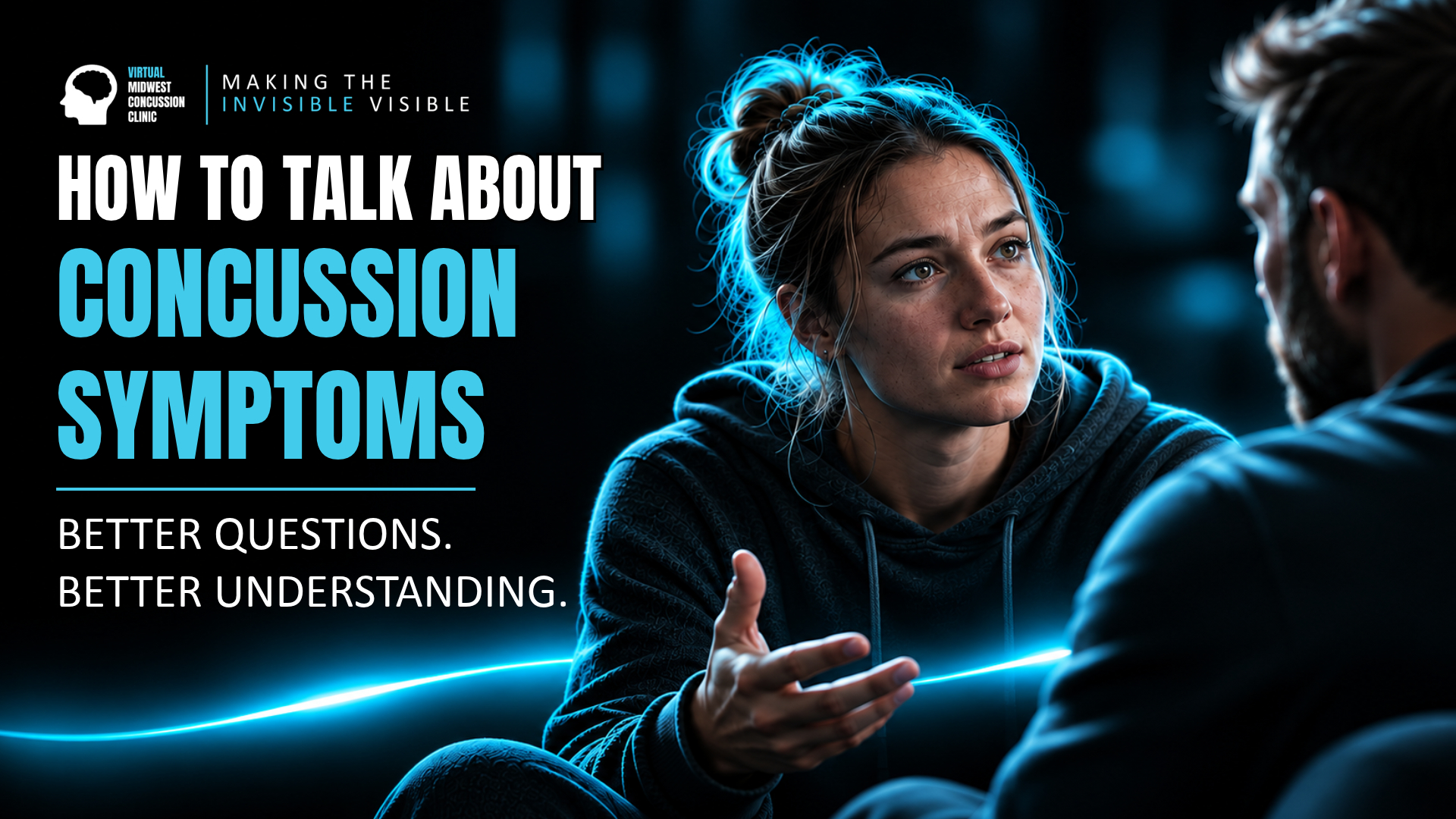
Clear communication matters.
Language matters.
Tone matters.
Instead of:
“Are you still dealing with that?”
Try:
“What feels most challenging right now?”
Instead of:
“But you look fine.”
Try:
“Help me understand what you’re experiencing.”
Support doesn’t require medical expertise.
It requires empathy and willingness to learn.
What We Stand For
At Midwest Concussion Clinic, our mission has always been simple:
Making the Invisible Visible.
We believe:
- Brain injuries deserve thoughtful, individualized care
- Recovery should be guided, not rushed
- Education should reduce fear, not create it
- Conversations about brain health should be calm, clear, and compassionate
March is a reminder of that commitment.
How You Can Help This Month
You don’t need to be a clinician to make an impact.
Here are a few ways to participate:
✔️ Share educational resources about concussion and brain injury
✔️ Thank an athletic trainer in your life
✔️ Encourage thoughtful evaluation when symptoms persist
✔️ Start a conversation about brain health at home, at school, or at work
If you want to deepen your understanding:
- Explore educational articles at mwconcussion.com
- Watch our Lunch & Learn sessions on YouTube
- Learn more about guided virtual evaluations
- Share this article with someone who may benefit
Awareness doesn’t have to be loud to be powerful.
It simply has to be consistent.
March Matters
The brain matters.
Relationships matter.
Advocacy matters.
Invisible injuries still deserve real care.
And care you can count on starts with understanding.
—–
Matt Campbell
Midwest Concussion Clinic
“Making The Invisible Visible”