Why Am I Afraid To Do Things Again After a Concussion?
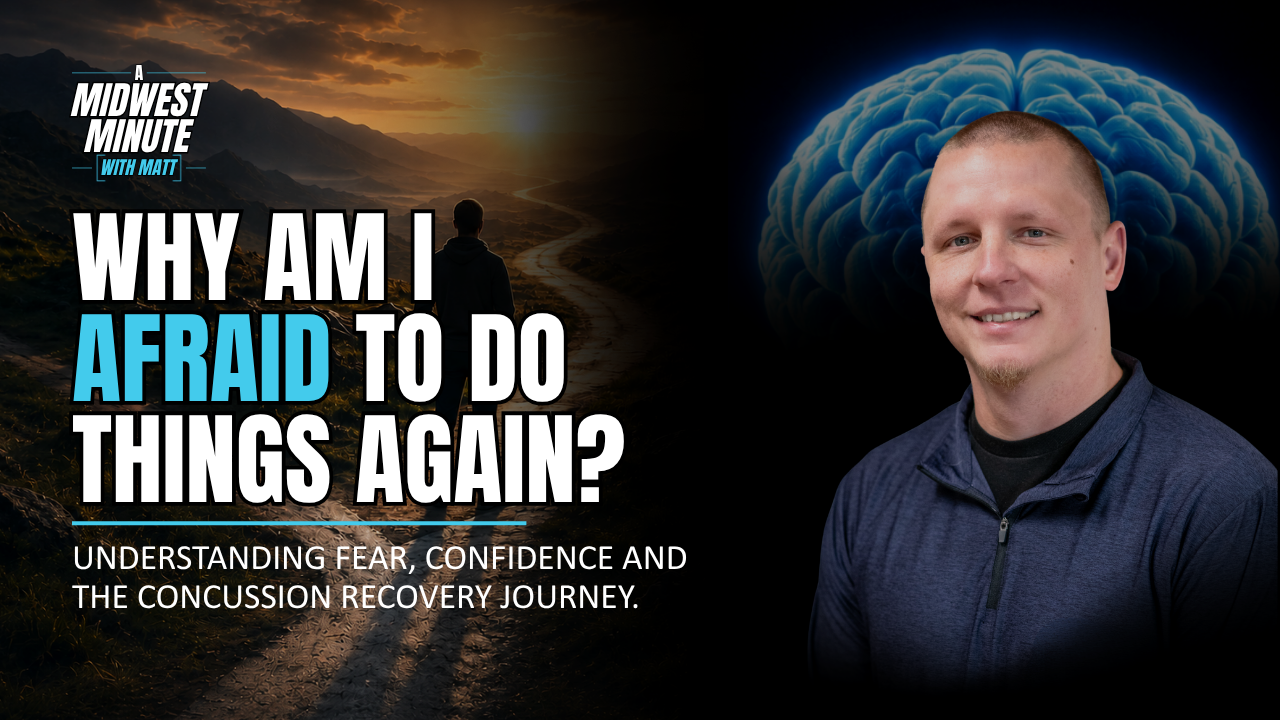
One of the strangest parts of concussion recovery is this:
Sometimes your symptoms improve, but your confidence doesn’t.
You start feeling nervous about things that never bothered you before.
Driving.
Going to the grocery store.
Exercising.
Returning to work.
Seeing friends.
Attending events.
Even when part of you wants to move forward, another part of you keeps asking:
“What if it doesn’t go well?”
If that sounds familiar, you’re not alone.
In fact, it’s one of the most common things I hear from people recovering from a concussion.
Recovery Isn’t Just Physical
Many people assume that once symptoms improve, confidence will automatically return.
Unfortunately, that’s not always how recovery works.
A concussion affects more than just physical symptoms. It can change how you view activities that were once routine.
If you’ve experienced symptom spikes while driving, working, exercising, or being in busy environments, your brain starts paying attention.
It starts making connections.
The next time you think about doing that activity, your brain remembers the last experience.
“The last time we tried this, it didn’t go well.”
That response isn’t weakness.
It’s not laziness.
It’s not a lack of motivation.
It’s your brain trying to protect you.
Why Fear Becomes Part of Recovery
One of the biggest challenges during concussion recovery is uncertainty.
Many people tell me:
“What if my symptoms come back?”
“What if I can’t handle it?”
“What if I make myself worse?”
The truth is, there are times when we simply don’t know exactly how you’ll respond until you try.
That’s where rehabilitation becomes important.
The goal isn’t to throw you back into activities and hope for the best.
The goal is to give you tools, strategies, and guidance that help you safely test your limits and learn what your brain can handle.
Over time, those experiences help rebuild confidence.
The Problem With Avoidance
Avoiding activities often feels good in the short term.
When you’re sitting in a quiet, dark room, symptoms may feel more manageable.
You have control.
You can predict your environment.
You can avoid things that might trigger symptoms.
The challenge is that life doesn’t happen in a dark room.
While avoidance can feel helpful initially, it often reinforces the belief that normal activities are dangerous.
The longer we avoid something, the bigger it can feel.
The more we avoid it, the more our confidence shrinks.
That’s why concussion recovery isn’t simply about symptom reduction.
It’s also about rebuilding trust in yourself and your abilities.
Confidence Is Built Through Experience
One of the most important things I tell patients is this:
Confidence is built through experience.
Confidence doesn’t come from thinking.
Confidence doesn’t come from planning.
Confidence comes from doing.
That doesn’t mean jumping back into everything at once.
If you’ve been off work for weeks, going straight back to eight-hour days probably isn’t the answer.
If you’re nervous about exercise, running a marathon tomorrow isn’t the answer.
Recovery works best when we break activities down into small, manageable pieces.
Small exposures.
Small wins.
Small successes.
Repeated consistently over time.
Those small victories teach your brain something important:
“I can do this.”
Stop Cannonballing Into The Deep End
I often use the analogy of a swimming pool.
Many people want to cannonball straight into the deep end.
They’re tired of feeling limited.
They’re tired of waiting.
They’re ready to get their life back.
I understand that feeling.
But concussion recovery usually responds better to wading into the water.
When you take gradual steps, you’re allowing your brain to adapt.
You’re showing yourself that you can handle the activity.
You’re building confidence one successful experience at a time.
The goal isn’t perfection.
The goal is progress.
Recovery Isn’t About Becoming Fearless
This may be the most important thing I can tell you:
Recovery isn’t about becoming fearless.
It’s about becoming confident.
Fear may still show up from time to time.
That’s normal.
The goal isn’t to eliminate every ounce of fear.
The goal is learning that you can move forward despite it.
You can learn what your fear is telling you.
You can understand why it’s there.
And you can continue building confidence through experience.
You’re Not Alone
If you’ve been afraid to return to activities after a concussion, you’re not weak.
You’re not broken.
And you’re certainly not alone.
I’ve worked with hundreds of people navigating concussion recovery, and this is one of the most common challenges they face.
The fear of the unknown is real.
But confidence can be rebuilt.
One small step.
One small exposure.
One small win at a time.
Because sometimes recovery isn’t about convincing yourself that nothing bad will happen.
Sometimes recovery is learning that you can handle whatever happens next.
Need help navigating concussion recovery?
At Midwest Concussion Clinic, we help patients understand their symptoms, rebuild confidence, and create individualized recovery plans that make sense.
Because recovery is about more than symptom reduction.
It’s about getting your life back.
Midwest Concussion Clinic
Making the Invisible Visible