Am I Making My Concussion Symptoms Worse?
Understanding Why Symptoms Increase During Recovery
One of the most common questions I hear from patients is:
“Did I just make my concussion worse?”
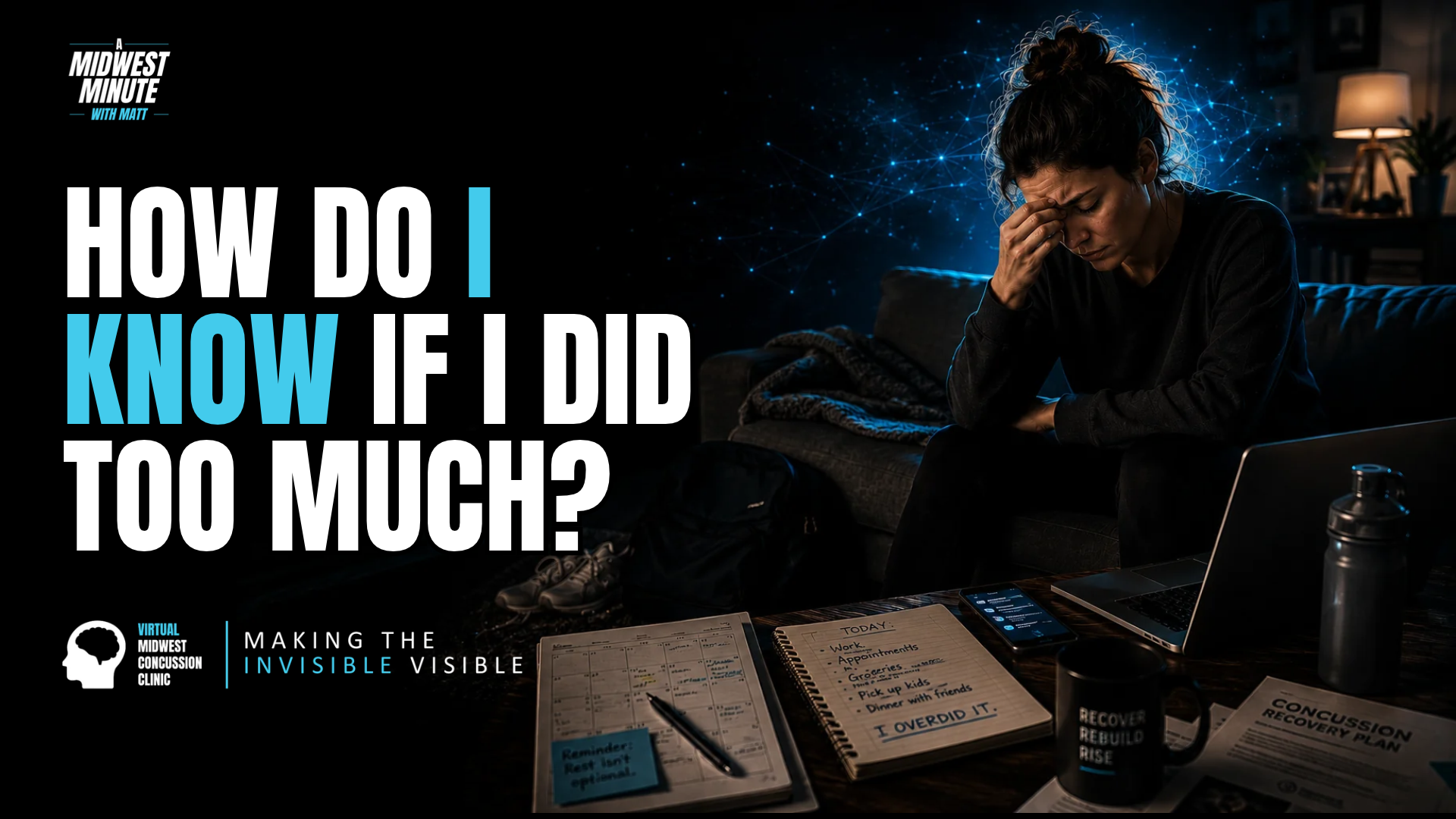
Maybe you exercised.
Maybe you spent too much time on your computer.
Maybe you went back to work, attended a family gathering, or simply had a busy day.
Then your symptoms increased.
Suddenly you’re wondering:
- Did I damage my brain again?
- Did I ruin all the progress I’ve made?
- Am I back at square one?
If you’ve ever had these thoughts, you’re not alone.
The good news is that in most cases, worsening symptoms do not mean you’ve caused more damage to your brain.
Understanding the difference between symptom increases and injury progression can dramatically reduce fear and help you recover with more confidence.
Symptoms Are Feedback—Not Proof of More Damage
One of the biggest misconceptions surrounding concussion recovery is believing that every increase in symptoms means the injury has gotten worse.
That’s usually not what’s happening.
Your symptoms are your brain’s way of communicating with you.
Think of them as a feedback system.
When your brain becomes overloaded, it increases symptoms to encourage you to slow down, adjust what you’re doing, or take a break.
That doesn’t automatically mean you’ve created another injury.
Instead, your brain is saying:
“This is more than I can comfortably handle right now.”
Understanding this difference is incredibly important because fear often comes from misunderstanding what symptoms actually represent.
Why Do Symptoms Increase?
Your brain is working much harder than normal after a concussion.
Activities that used to feel effortless now require significantly more energy.
Common symptom triggers include:
- Long periods of screen time
- Busy environments
- Physical activity
- Mental concentration
- Stress
- Poor sleep
- Loud or visually stimulating environments
When these demands exceed your brain’s current capacity, symptoms may increase.
That doesn’t necessarily mean you’ve hurt yourself.
It means your brain is asking for an adjustment.
Your Brain Has a Built-In Protection System
One way I explain this to patients is that symptoms are your brain’s natural protection mechanism.
Often, symptoms increase gradually rather than all at once.
You might notice:
- A mild headache
- Then dizziness
- Then nausea
- Eventually overwhelming fatigue
These symptoms are designed to encourage you to stop before you push too far.
They’re warnings—not punishments.
Listening to them allows you to make adjustments before your brain becomes significantly overloaded.
More Symptoms Doesn’t Mean More Injury
This is one of the most important concepts in concussion recovery.
Symptoms can increase because your nervous system has become temporarily overwhelmed.
That is very different from creating additional brain damage.
Think of it this way:
A sore muscle after exercising doesn’t necessarily mean you’ve injured yourself.
It often means you’ve exceeded your current capacity.
The same principle frequently applies during concussion recovery.
Your goal isn’t to eliminate every symptom.
Your goal is learning where your current limits are so they can gradually expand over time.
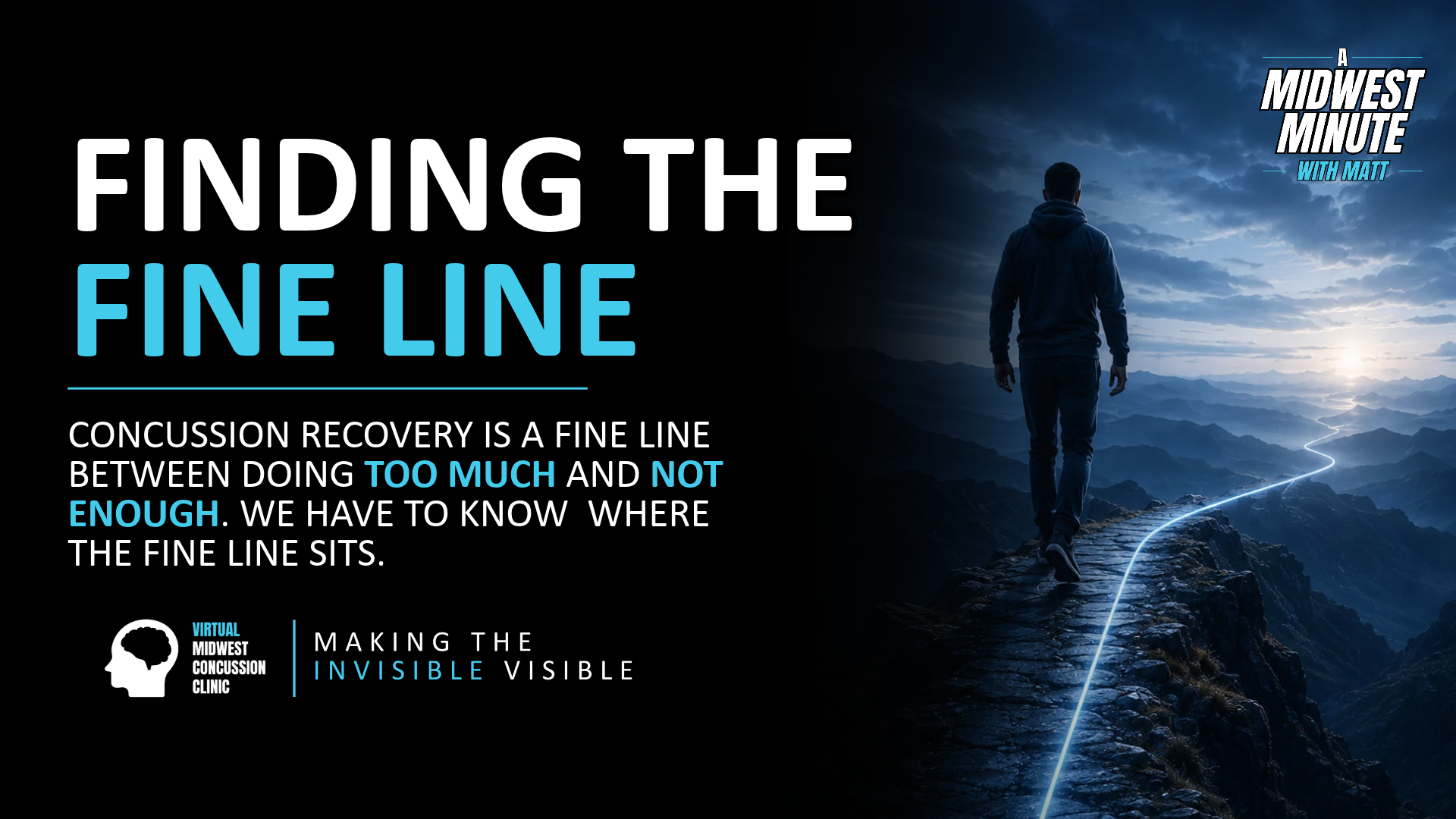
The Fine Line Between Too Much and Too Little
Recovery isn’t about complete rest forever.
It’s also not about pushing through symptoms.
Successful recovery usually happens somewhere in the middle.
You’re constantly trying to find the balance between:
- Doing enough to stimulate recovery
- Avoiding overwhelming your brain
The challenging part is that this “sweet spot” changes throughout recovery.
What felt difficult last week may feel easy today.
Likewise, something that was manageable yesterday may feel harder if you’re tired, stressed, or didn’t sleep well.
Recovery isn’t linear.
It’s adaptive.
Fear Can Make Symptoms Feel Worse
Fear is one of the most overlooked parts of concussion recovery.
Many people become afraid every time symptoms change.
Questions start racing through their mind:
- What if I’m getting worse?
- What if I never recover?
- What if I did permanent damage?
As fear increases, many people begin monitoring every small sensation.
A headache changes from a 2/10 to a 3/10.
Immediately the brain starts asking:
“What does this mean?”
The more we focus on every symptom, the more anxiety grows.
Ironically, increased anxiety often makes symptoms feel even more intense.
Fear and symptoms can feed each other in a frustrating cycle.
Understanding what’s happening helps break that cycle.
What Should You Do When Symptoms Increase?
Instead of panicking, pause.
Ask yourself a few simple questions:
- What activity was I doing?
- When did my symptoms begin?
- Did they increase gradually or suddenly?
- Was I doing something new?
- Did I go longer than I normally can?
These questions help identify patterns.
Instead of fearing symptoms, you begin learning from them.
That information allows you to adjust your routine rather than avoiding activity altogether.
Listen to Your Brain—Don’t Fear It
Symptoms deserve your attention.
They deserve your respect.
But they don’t deserve your panic.
Your brain is constantly providing information about what it can currently tolerate.
Learning to interpret that feedback is one of the most valuable skills during recovery.
As your understanding grows, your confidence grows.
And confidence often becomes one of the strongest drivers of long-term recovery.
Final Thoughts
Temporary symptom increases do not automatically mean you’ve caused more damage.
More often, they mean your brain needs an adjustment—not that you’ve gone backward.
Recovery is about understanding your brain, listening to its feedback, and making small changes that keep you moving forward.
The more you understand your injury, the less fear controls your recovery.
And that understanding can make all the difference.
Need Help Understanding Your Symptoms?
At Midwest Concussion Clinic, we help people throughout Indiana understand why their symptoms are happening—not just how to manage them.
Through individualized virtual concussion evaluations and rehabilitation, we help patients build confidence, reduce fear, and create a recovery plan that’s tailored to their specific needs.
If you’re feeling stuck or wondering whether you’re doing the right things during recovery, we’re here to help.
Schedule your virtual concussion evaluation today at www.mwconcussion.com.
Listen to the Full Podcast
Prefer to listen instead?
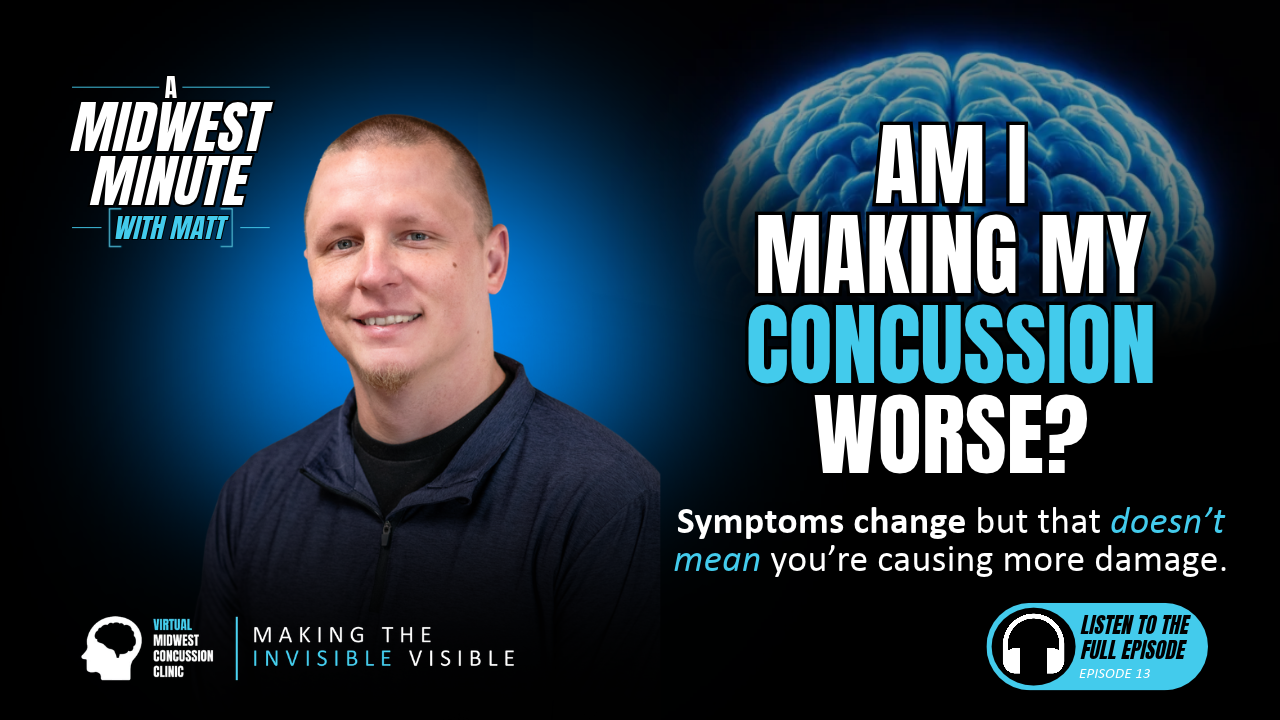
Check out Episode 13 of A Midwest Minute with Matt:
“Am I Making My Concussion Worse?”
Simple concussion conversations that just make sense.