How Do I Know If I’ve Done Too Much After a Concussion?
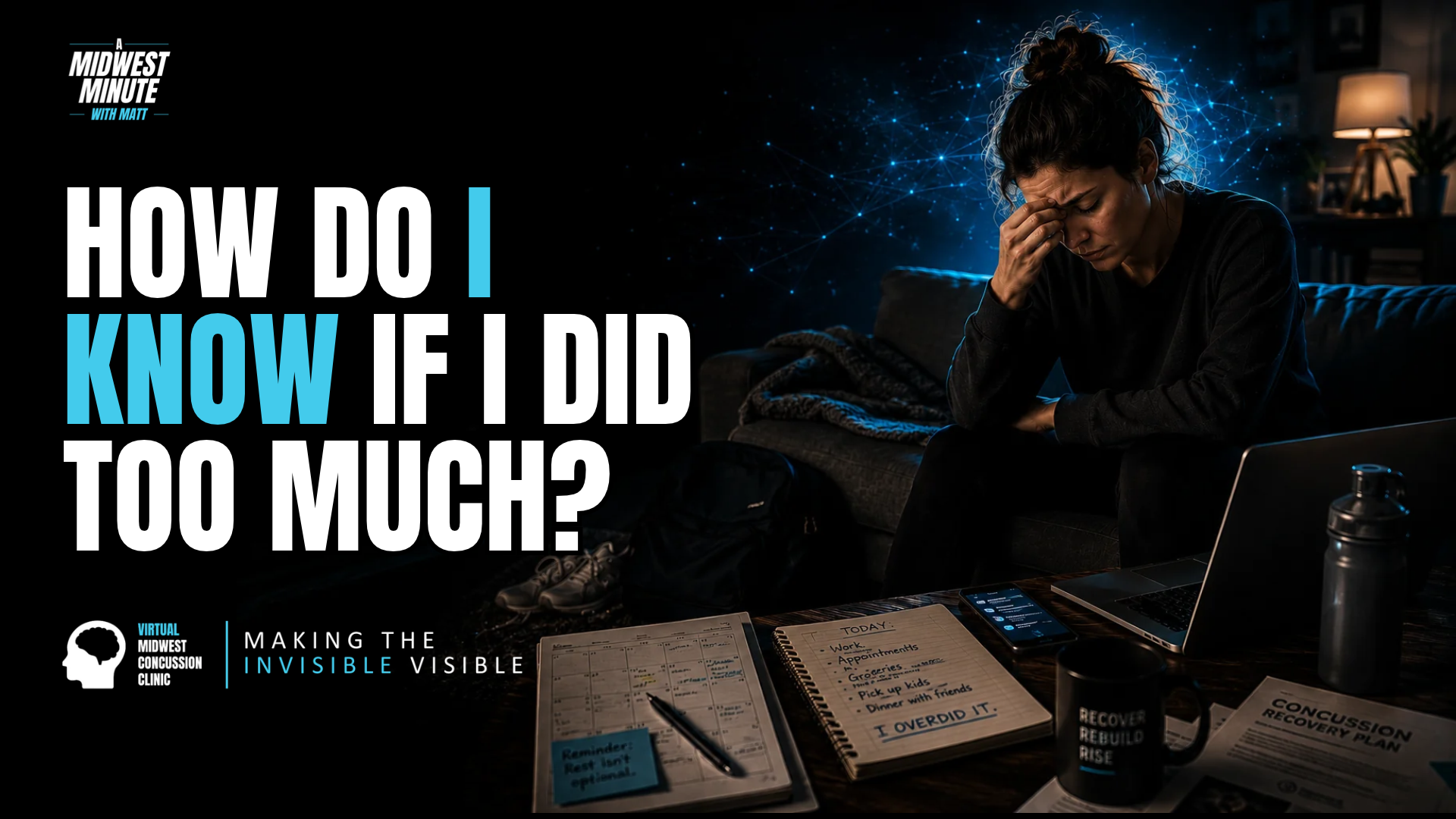
One of the most common questions people ask during concussion recovery is:
“How do I know if I’ve done too much?”
Maybe you went back to work.
Maybe you ran errands.
Maybe you went to therapy, spent time with friends, or simply tried to get back to your normal routine.
Then later that day—or even the next morning—you felt worse.
Your headache increased.
Your dizziness returned.
Your brain felt exhausted.
Naturally, your mind starts racing.
“Did I make my brain injury worse?”
Fortunately, in most cases, the answer is no.
The increase in symptoms is usually your brain giving you valuable information—not telling you that you’ve caused permanent damage.
Learning how to interpret that information is one of the most important skills during concussion recovery.
This article is based on Episode 15 of A Midwest Minute with Matt. The podcast explores practical concussion recovery strategies in plain language for patients and families.
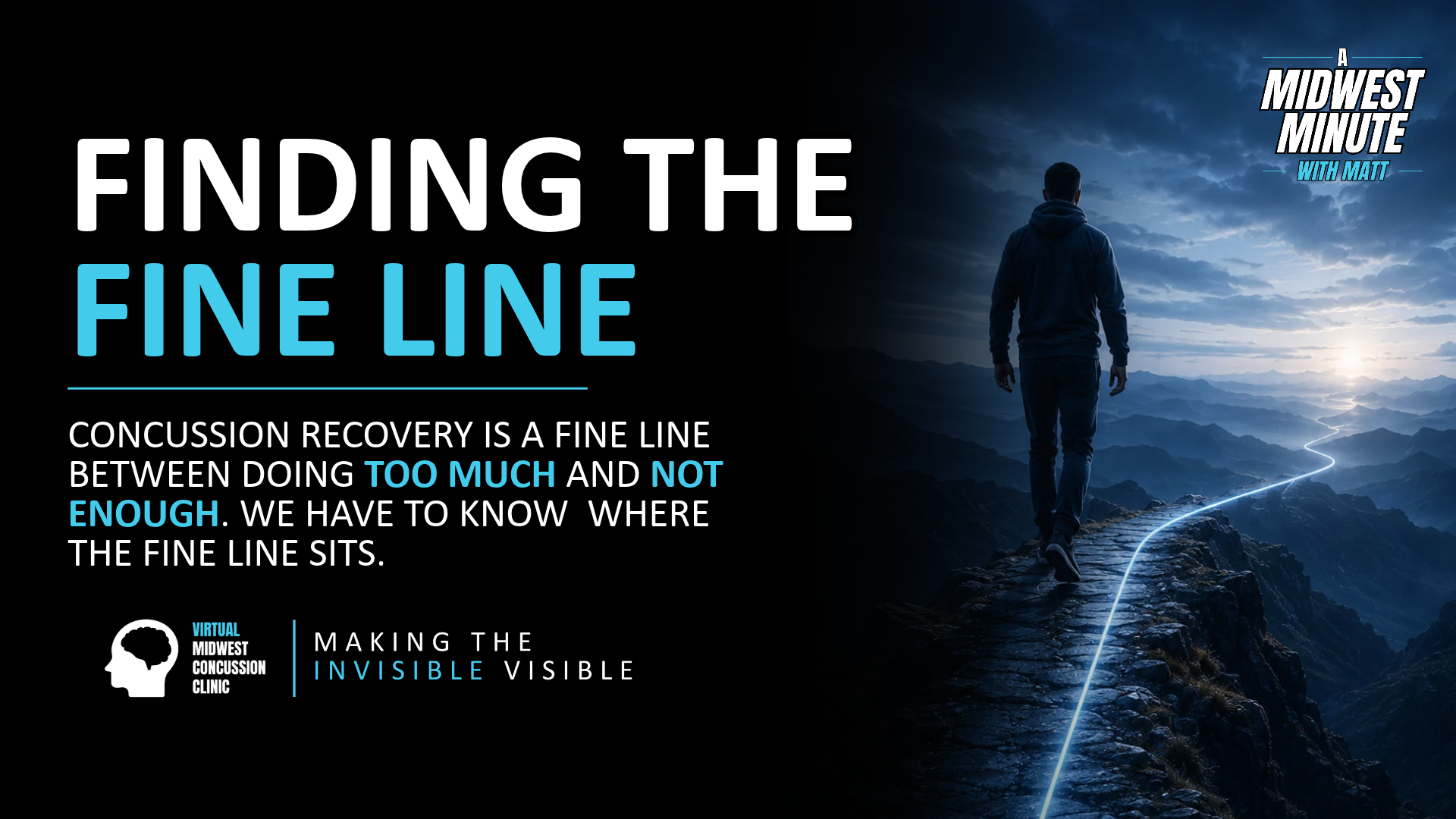
Recovery Is a Balance Between Too Much and Not Enough
One of the biggest misconceptions about concussion recovery is that healing means avoiding all activity.
It doesn’t.
Likewise, pushing through symptoms isn’t the answer either.
Recovery exists in the middle.
Every day your brain has a certain amount of energy available.
Some days that capacity is higher.
Some days it’s lower.
Your job isn’t to avoid activity.
Your job is to learn where your current limit is—and work just below it.
Your Capacity Changes Every Day
Many people expect recovery to be predictable.
Unfortunately, concussion recovery doesn’t work that way.
Your capacity changes depending on things like:
- Sleep quality
- Stress
- Illness
- Mental workload
- Physical activity
- Bright lights
- Busy environments
- Noise
- Emotional stress
A great night’s sleep may allow you to accomplish much more.
A poor night’s sleep may cut that capacity in half.
That doesn’t mean you’re getting worse.
It simply means your brain has less available energy that day.
Symptoms Are Feedback—Not Punishment
This is one of the most important concepts in concussion recovery.
Your symptoms are not your enemy.
They’re your brain’s communication system.
When symptoms increase, your brain isn’t saying:
“You failed.”
It’s saying:
“I’ve had enough for today.”
Learning to listen to that feedback allows you to make better decisions tomorrow.
Ignoring those warning signs usually results in longer recovery times and more symptom flare-ups.
Five Signs You May Have Done Too Much
Not everyone experiences symptoms immediately.
Some people don’t notice the consequences until hours later—or even the next morning.
Here are some of the biggest warning signs.
1. Your symptoms increase by two or more points
Before starting an activity, rate your symptoms on a 0–10 scale.
If your headache, dizziness, nausea, or brain fog increases by approximately two points during the activity, it’s usually time to modify what you’re doing.
2. You wake up feeling worse the next morning
This is one of the most reliable indicators.
Ideally, you should wake up feeling the same—or better—than when you went to bed.
If you consistently wake up feeling worse, yesterday likely exceeded your brain’s capacity.
3. Recovery takes much longer than usual
Maybe you normally need fifteen minutes of rest after work.
Now you’re still struggling an hour later.
That longer recovery period often means you pushed beyond what your brain could tolerate.
4. You feel completely wiped out
Some fatigue is expected.
Feeling completely depleted after a relatively normal activity often means your brain spent more energy than it had available.
5. Symptoms continue getting worse
Symptoms that continue climbing after an activity instead of settling down are another clue that your brain has exceeded its current capacity.
Does Doing Too Much Cause More Brain Damage?
This is one of the biggest fears patients have.
Thankfully, symptom flare-ups generally do not mean you’ve caused additional brain damage.
What they usually mean is:
- Your brain became overloaded.
- Your nervous system needs more recovery time.
- You learned where your current limit is.
That distinction matters.
Instead of viewing symptom increases as failure, view them as information that helps guide your next step.
What Should You Do If Symptoms Increase?
The first step is simple:
Don’t panic.
Take a moment to think through what happened.
Ask yourself:
- How did I feel before I started?
- How long was I doing the activity?
- Was today’s environment more demanding?
- Did I sleep well?
- Was I already stressed or fatigued?
These questions help identify patterns over time.
That’s how you gradually learn your personal capacity.
Not by avoiding life—but by adjusting it.
Recovery Isn’t About Being Perfect
Everyone exceeds their limit at some point.
Everyone.
That’s part of recovery.
The goal isn’t to eliminate every symptom forever.
The goal is to:
- Learn your limits.
- Respect your limits.
- Gradually expand your limits.
Recovery happens through small, consistent wins—not perfect days.
Each time you learn from your symptoms, you’re gathering information that helps move your recovery forward.
The Bottom Line
Concussion recovery isn’t about avoiding activity.
It’s about finding the balance between doing enough to promote healing while avoiding overwhelming your brain.
Remember:
- Your capacity changes every day.
- Symptoms are feedback—not punishment.
- Feeling worse doesn’t automatically mean you’ve caused more damage.
- The next morning often tells you whether yesterday was too much.
- Progress comes from listening, adjusting, and continuing to move forward one step at a time.
If you’re struggling to understand your symptoms or aren’t sure how much activity is appropriate during your recovery, an individualized evaluation can help identify your current capacity and develop a plan that fits your specific situation.
At Midwest Concussion Clinic, we provide one-on-one virtual concussion evaluations for patients throughout Indiana, helping you understand your symptoms, regain confidence, and move forward with a personalized recovery plan.