Finding the Fine Line: The Key To Concussion Recovery
One of the most challenging parts of concussion recovery isn’t deciding what to do.
It’s deciding how much to do.
Should you take a walk? Return to work? Exercise? Rest? Push through? Cancel your plans?
For many people recovering from a concussion, these questions become part of everyday life. Unfortunately, the answer is rarely as simple as “always rest” or “just push through it.”
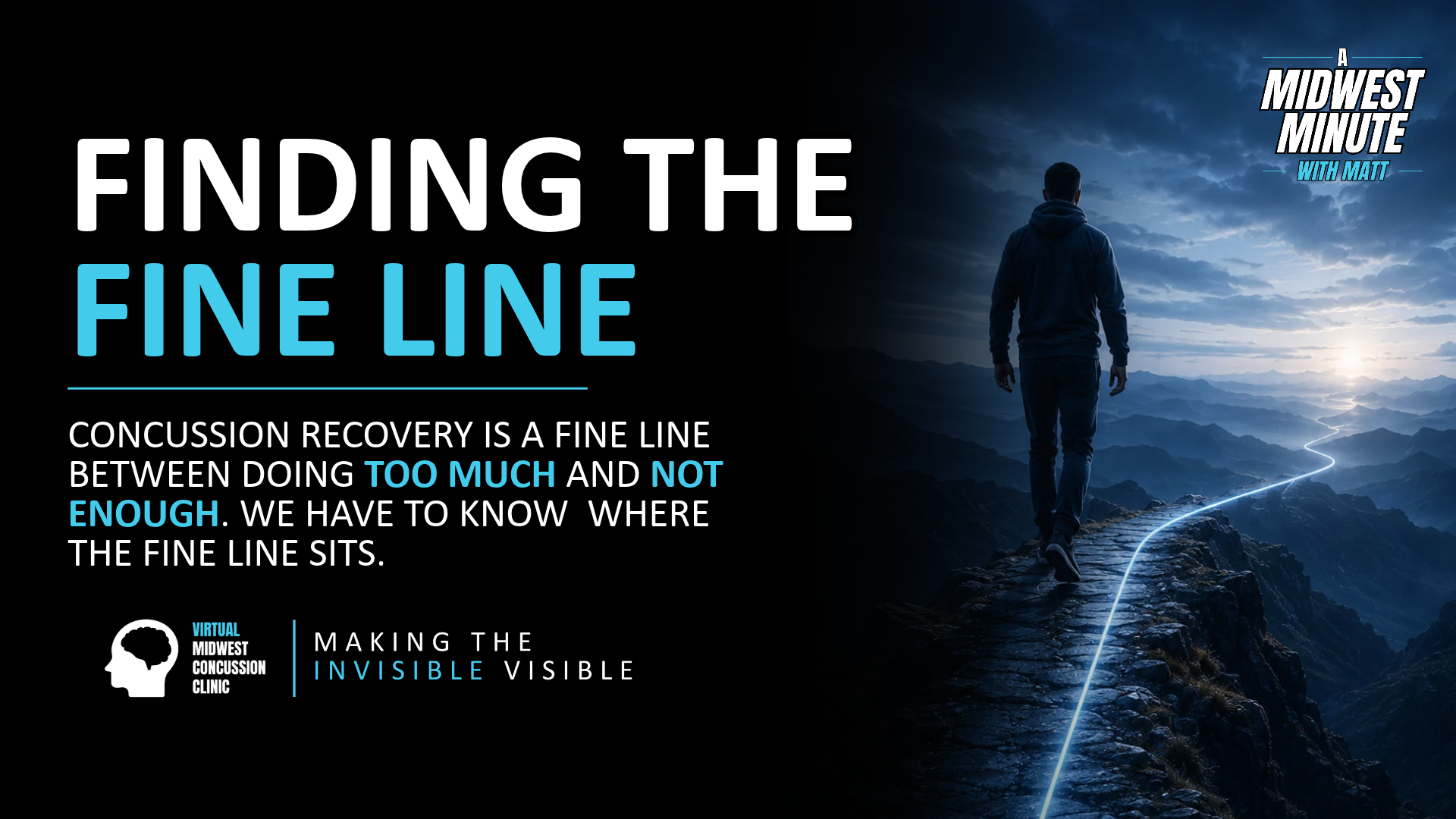
Recovery isn’t found at either extreme.
It’s found somewhere in the middle.
The Two Recovery Traps
Many people fall into one of two common patterns after a concussion.
The first is trying to power through symptoms and continue life exactly as it was before the injury.
The second is avoiding nearly every activity out of fear that symptoms will get worse.
Neither approach is ideal.
Years ago, complete rest in a dark room was commonly recommended after a concussion. We now know that prolonged inactivity can actually slow recovery. At the same time, ignoring symptoms and pushing through significant discomfort can overload the brain and increase symptoms.
Successful recovery requires finding a balance between these two extremes.
Your Brain Has a Daily Capacity
One of the most important concepts in concussion recovery is understanding your brain’s capacity.
Think of your brain as having an energy budget each day.
Everything requires some of that budget:
- Work
- School
- Exercise
- Driving
- Screen time
- Social interactions
- Busy environments
- Decision making
After a concussion, that capacity is temporarily reduced.
The challenge is that your capacity isn’t fixed.
Some days you’ll tolerate much more activity.
Other days, even simple tasks may feel overwhelming.
Factors such as sleep, stress, illness, busy environments, weather, nutrition, and emotional stress can all influence how much your brain can comfortably handle.
That’s why yesterday’s success doesn’t always predict today’s ability.
Symptoms Are Feedback—Not Failure
One of the biggest mindset shifts during recovery is changing how you view symptoms.
Symptoms aren’t your enemy.
They’re information.
Your brain is constantly communicating how it’s responding to the demands you’re placing on it.
If symptoms begin increasing during an activity, it doesn’t necessarily mean you’ve caused damage or ruined your recovery.
Instead, your brain is providing valuable feedback that you’ve reached today’s current capacity.
Learning to recognize these patterns helps you make better decisions moving forward.
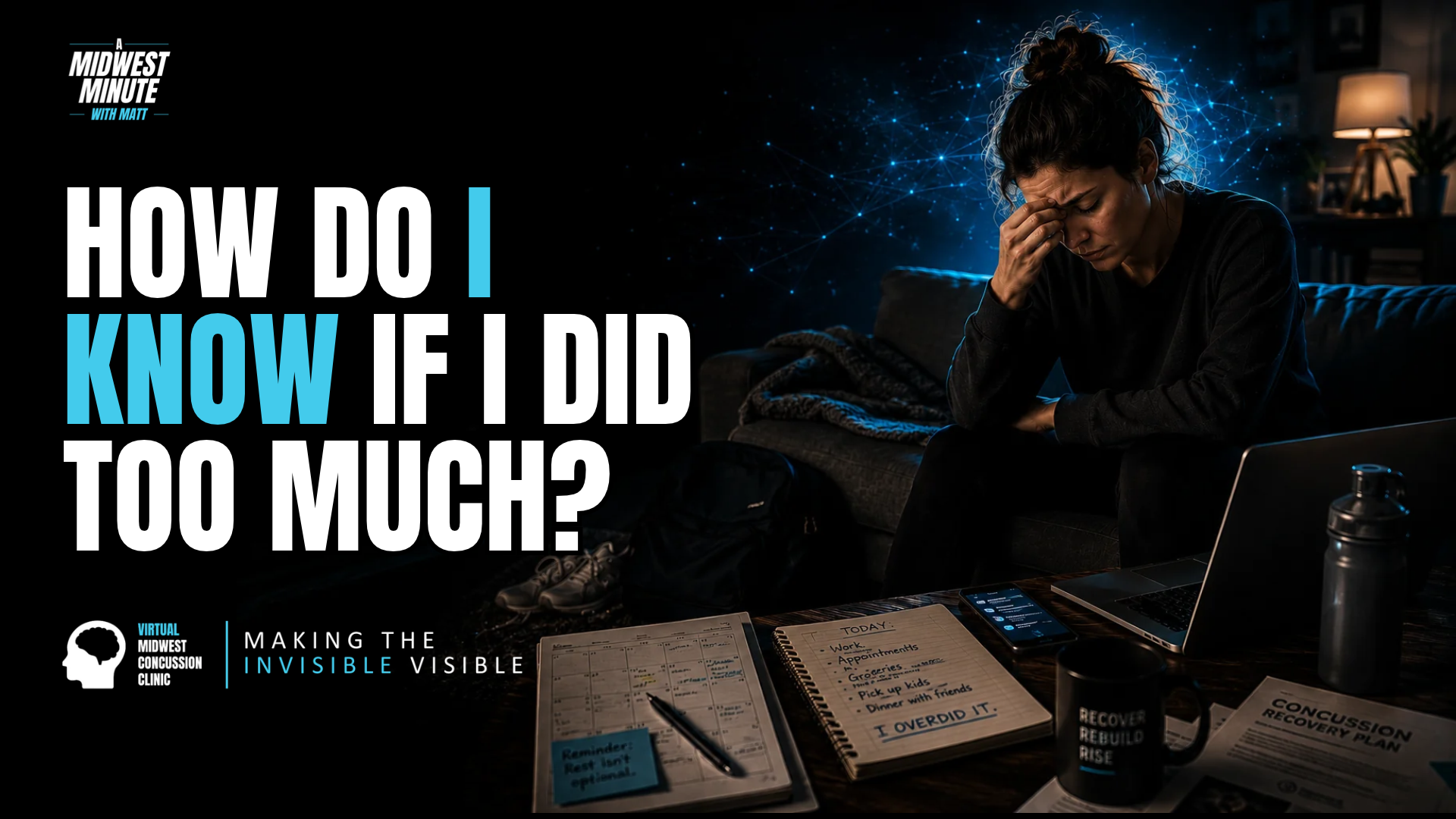
Stop Asking “Did I Ruin My Recovery?”
Almost every concussion specialist hears the same question.
“Did I do too much?”
More importantly:
“Did I ruin my recovery?”
Fortunately, the answer is almost always no.
Instead of focusing on whether you made a mistake, ask yourself:
- What activity was I doing?
- When did symptoms begin increasing?
- Which symptoms changed first?
- How long did they last?
- What can I adjust next time?
Every experience teaches you something about your current tolerance.
That information becomes your roadmap.
Recovery Is About Expanding Your Capacity
Many people believe they should simply stay below their symptom threshold forever.
That’s not the goal.
The goal is gradually increasing what your brain can tolerate.
Imagine you discover that spending 30 minutes in a restaurant consistently increases your headache.
That doesn’t mean restaurants are off-limits.
It means your current capacity might be around 25 minutes.
By respecting that limit today, then gradually increasing exposure over time, your brain begins adapting.
Small, successful experiences build confidence.
Confidence encourages participation.
Participation helps recovery.
Progress Isn’t Perfect
Concussion recovery isn’t linear.
Some days you’ll do too much.
Some days you’ll need more rest.
Some days everything seems easier.
Other days feel like you’ve taken a step backward.
That’s normal.
Recovery isn’t measured by having perfect days.
It’s measured by gradually increasing your ability to participate in the activities that matter most to you.
Every successful walk.
Every productive workday.
Every family dinner.
Every trip to the grocery store.
These small victories add up.
Finding Your Fine Line
The “fine line” during concussion recovery isn’t a destination.
It’s a moving target that changes as your brain heals.
The more you learn to recognize your symptoms, understand your capacity, and adjust your activities, the more confidence you’ll gain.
Recovery isn’t about avoiding life.
It’s about learning how to participate in it again—one step at a time.
Need Help Finding Your Fine Line?
At Midwest Concussion Clinic, we help patients throughout Indiana understand their symptoms, build confidence, and create individualized recovery plans that fit their lives.
If you’re struggling with persistent concussion symptoms or aren’t sure how much activity is right for you, we’re here to help.
Schedule a virtual concussion evaluation today and start building confidence in your recovery.