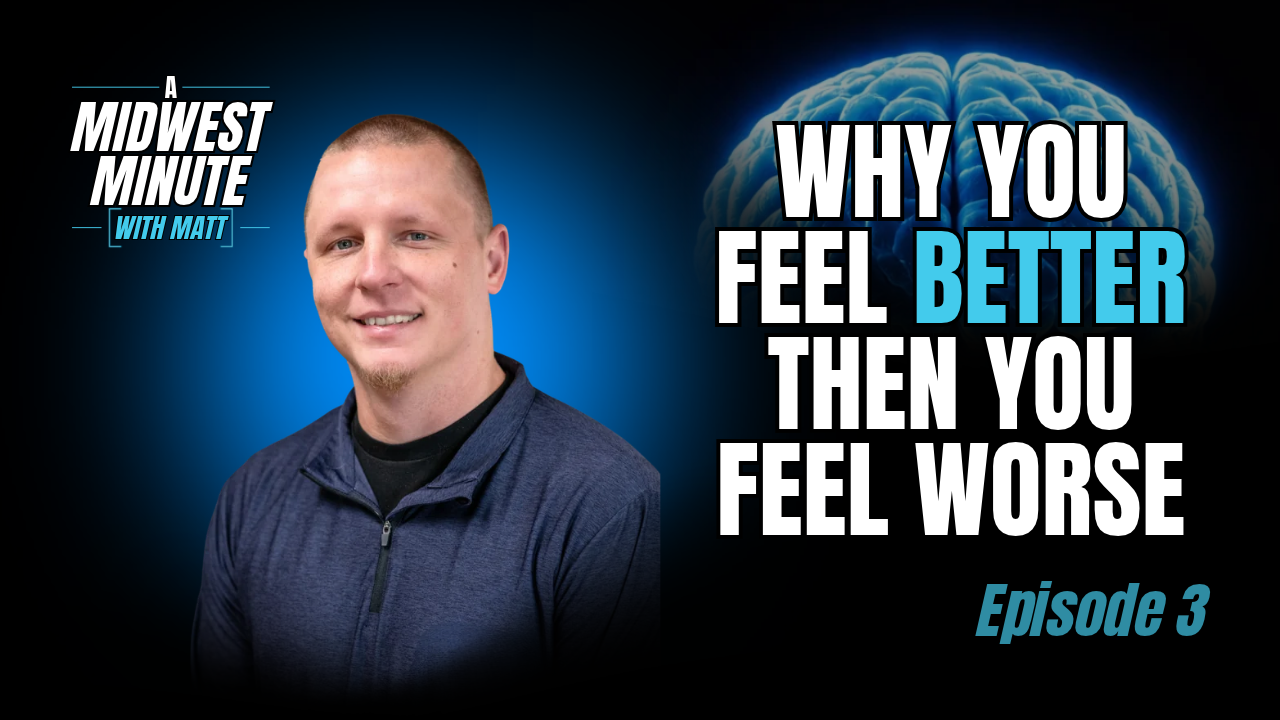
Why Do I Feel Better Then Feel Worse After a Concussion?
A Midwest Minute With Matt
One of the hardest parts of concussion recovery is this:
You finally have a good day.
Maybe you feel more like yourself.
Maybe your headache is gone.
Maybe you tolerate more activity than you have in weeks.
For the first time in a while, you start thinking:
“I think I’m getting better.”
Then the next day arrives.
The symptoms are back.
The headache returns.
The fatigue hits harder.
The dizziness shows up again.
And suddenly you’re asking yourself:
“What happened?”
If you’ve ever felt this way during concussion recovery, you’re not alone.
And more importantly:
It doesn’t necessarily mean anything is wrong.
Recovery Isn’t a Straight Line
Most people expect recovery to happen in a predictable way.
Today should be better than yesterday.
Tomorrow should be better than today.
Each day should move steadily forward until symptoms disappear completely.
Unfortunately, concussion recovery rarely works that way.
Recovery is not linear.
There are good days.
There are bad days.
There are great mornings followed by difficult afternoons.
There are productive weeks followed by frustrating setbacks.
That’s not because you’re failing.
That’s because you’re recovering from a brain injury.
The Roller Coaster Nobody Wants to Ride
I often compare concussion recovery to a roller coaster.
Not because it’s fun.
Not because anybody enjoys it.
But because recovery has ups and downs.
You climb.
You dip.
You level out.
Then you climb again.
One day you feel normal.
The next day you feel like you’re back at square one.
That unpredictability can be one of the most emotionally exhausting parts of recovery.
Patients often tell me:
“I did the exact same thing yesterday and felt fine.”
“Why do I feel terrible today?”
It’s a fair question.
The answer usually comes down to one thing:
Capacity.
Good Days Are a Sign of Progress
Let’s clear something up.
Good days are not the enemy.
I never want patients to fear having a good day.
Good days matter.
They’re important.
They’re often a sign that healing is happening.
Good days tend to happen when we’ve built a strong foundation:
- Better sleep
- Better hydration
- Better nutrition
- Better pacing
- Better symptom awareness
When those pieces come together, the brain has a greater ability to handle the demands of daily life.
And that’s exactly what we want.
The goal isn’t fewer good days.
The goal is more of them.
Why Good Days Sometimes Lead to Bad Ones
This is where things get tricky.
When people finally start feeling better, they naturally want to do more.
And honestly?
I don’t blame them.
If you’ve spent weeks or months feeling terrible, having a good day feels like freedom.
So you clean the house.
Run errands.
Meet friends.
Answer emails.
Catch up on work.
Maybe do all of those things in the same day.
Then the next morning arrives.
And you’re wiped out.
The problem wasn’t necessarily what you did.
The problem was often how much you did.
Concussions don’t just affect symptoms.
They affect capacity.
And sometimes a good day tricks us into thinking our capacity has fully returned when it hasn’t.
The Importance of Pacing
One of the most valuable skills during concussion recovery is learning how to pace yourself.
Pacing doesn’t mean avoiding activity.
It doesn’t mean sitting in a dark room.
It means learning how to balance activity and recovery.
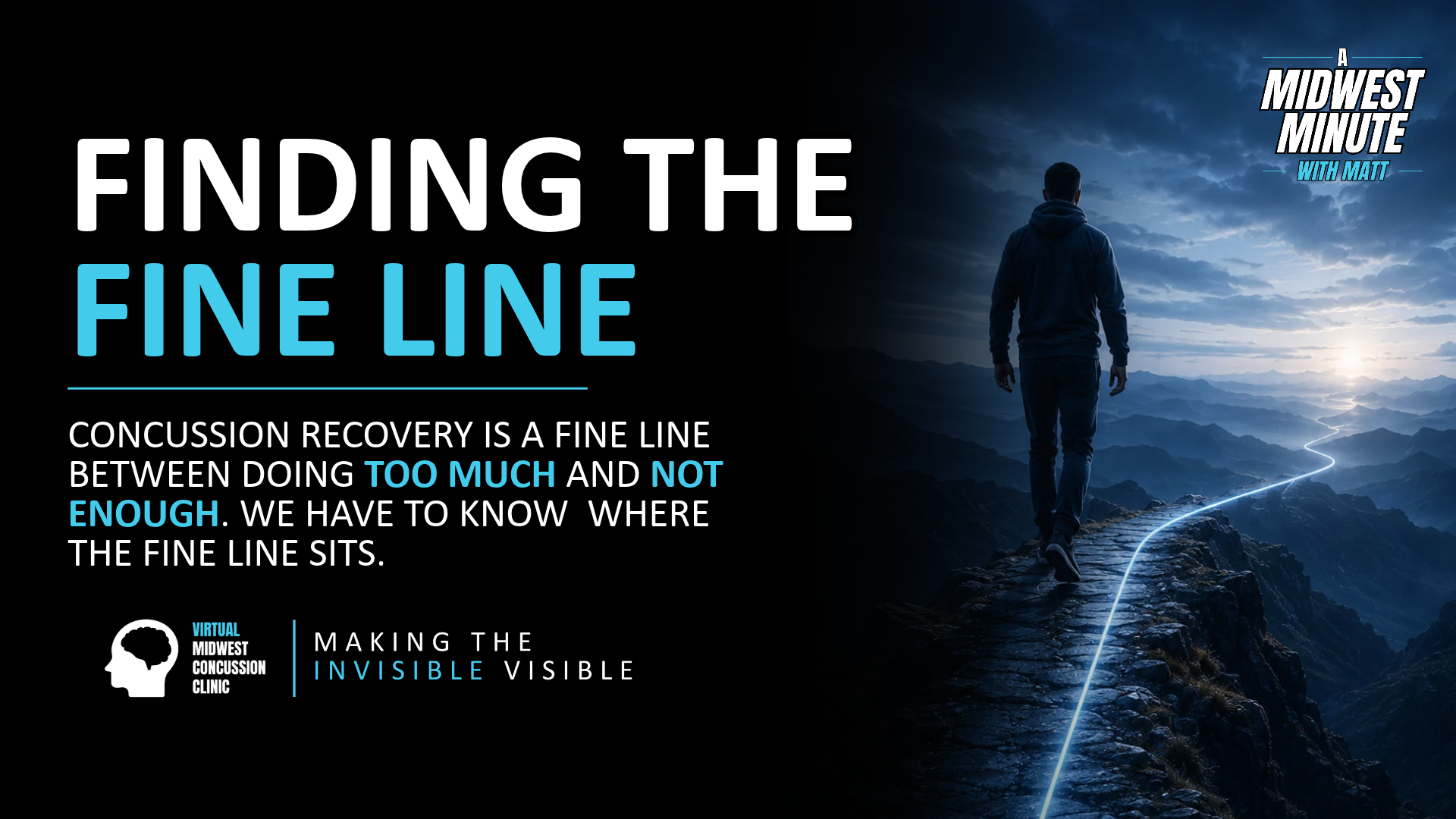
The goal is finding the sweet spot where the brain is challenged enough to improve without becoming overwhelmed.
That’s where progress happens.
Too little stimulation can slow progress.
Too much stimulation can create symptom spikes.
The key is finding the middle ground.
Sleep Still Matters
If you’ve listened to my content before, you probably know what’s coming.
Sleep.
Because almost every conversation about concussion recovery eventually comes back to sleep.
Sleep is where recovery happens.
It’s where the brain restores energy.
It’s where healing processes occur.
It’s where regulation improves.
The challenge is that concussion symptoms often make sleep difficult.
People sleep too much.
Then not enough.
They wake up repeatedly.
They struggle to fall asleep.
They feel exhausted despite spending ten hours in bed.
It’s frustrating.
But improving sleep quality remains one of the most powerful ways to improve recovery.
Bad Days Are Feedback
This may be the most important takeaway from today’s conversation.
Bad days are not failure.
Bad days are feedback.
Read that again.
Bad days are not proof that you’re broken.
Bad days are not proof that you’re getting worse.
Bad days are not proof that you caused more damage.
They’re information.
They’re helping us understand where the limits currently exist.
They’re helping us understand what needs to be adjusted.
Maybe it was too much screen time.
Maybe it was too much noise.
Maybe it was too much socializing.
Maybe it was poor sleep.
Maybe it was stress.
The bad day isn’t the problem.
The lesson inside the bad day is what matters.
Recovery Is About Trends
One symptom spike doesn’t define recovery.
One bad day doesn’t define recovery.
One difficult week doesn’t define recovery.
Recovery is measured in trends.
Are your symptom spikes less intense?
Are you recovering faster?
Are your good days becoming more common?
Can you tolerate more than you could last month?
Those are the questions that matter.
Not whether today was perfect.
Because perfection isn’t the goal.
Progress is.
The Bottom Line
Concussion recovery is unpredictable.
But unpredictable does not mean impossible.
The ups and downs are often part of the process.
The goal isn’t to eliminate every bad day.
The goal is to learn from them.
To adjust.
To keep moving forward.
To stack small wins.
And to trust that progress is happening even when it doesn’t feel perfect.
Because recovery isn’t measured by one bad day.
It’s measured by the overall direction you’re moving.
And sometimes the biggest sign you’re improving is not that you never have bad days.
It’s that you recover from them faster.
Making the Invisible Visible
At Midwest Concussion Clinic, we help people understand the “why” behind their symptoms and build individualized recovery plans that make sense.
Because recovery becomes less overwhelming when you understand the process.
Learn more or schedule your initial evaluation at mwconcussion.com.