What Do I Do After A Concussion?
You’ve left the emergency room.
The scans were normal. You were told it’s a concussion. You were given a list of warning signs and told to follow up with someone if things don’t improve.
Then you get home.
And suddenly, the questions start.
Should they sleep?
Should I wake them up every few hours?
Can they look at their phone?
When should they go back to school or work?
Should they exercise?
Should they be lying in a dark room?
Who exactly are we supposed to follow up with?
And underneath all of those questions is usually a much bigger one:
What do I actually do now?
If you’re the person recovering from the concussion, that uncertainty can be overwhelming.
If you’re the parent, spouse, friend, or caregiver trying to help them, it can feel just as heavy.
The good news is that you don’t need to have the entire recovery figured out today.
You just need to know what comes next.
What Should I Do in the First 48 Hours After a Concussion?
If you’ve already been evaluated and sent home, start with the discharge instructions you were given.
The first couple of days are about relative rest, monitoring symptoms, and gradually returning to manageable everyday activities.
- Follow your discharge instructions. Know which warning signs require immediate medical attention.
- Prioritize sleep. You generally don’t need to wake someone every few hours unless their healthcare team specifically instructed you to.
- Reduce unnecessary stimulation. Limit activities that significantly increase symptoms, including recreational screen use.
- Avoid another head injury. Stay away from contact sports and activities that create a meaningful risk of another impact.
- Begin gradually moving again. As tolerated, light everyday activity and gentle walking can be appropriate.
- Arrange follow-up care. If symptoms are persisting, worsening, or interfering with daily activities, seek guidance from a clinician experienced in concussion management.
You don’t have to do everything perfectly.
The goal is to understand what matters today and begin building a plan for tomorrow.
Why Leaving the Emergency Room Can Feel So Confusing
One of the biggest sources of frustration after a concussion is misunderstanding what the emergency department is designed to do.
The emergency department has an incredibly important job: identify and manage potentially life-threatening problems.
With a head injury, that means evaluating whether something more serious could be causing symptoms such as changes in mental status, headaches, dizziness, or disorientation.
But ruling out an emergency and managing concussion recovery are two different parts of healthcare.
That’s why someone can leave the emergency room with reassuring testing and still feel terrible.
Understanding what a concussion actually is can help explain why normal imaging doesn’t always mean normal function.
It’s also why families sometimes walk out thinking:
“They told us everything was okay—but this person clearly isn’t okay.”
Those two things aren’t necessarily contradictory.
You may be medically stable from an emergency perspective while still experiencing symptoms that need to be managed as part of your concussion recovery.
The emergency department answers an important question:
Are we safe right now?
Concussion care then needs to help answer another:
What do we do next?
“Follow Up With Someone” Isn’t Always a Plan
This is where the process can become frustrating.
You may be told to follow up with your primary care provider.
Then you call and discover they aren’t comfortable managing concussions.
You may be referred somewhere else.
That office may not provide the service you need.
You call another number.
You wait.
Meanwhile, someone you care about is sitting at home with a headache, dizziness, nausea, fatigue, difficulty concentrating, or other symptoms—and you’re trying to decide what you’re supposed to do.
It can start to feel like you’re being passed from one place to another without anyone giving you an actual plan.
That uncertainty creates fear.
And sometimes, what someone needs most in that moment isn’t another stack of information.
They need someone to help them understand the next step.
Sometimes a Plan Changes Everything
I recently spoke with a parent who was experiencing exactly this.
Their child had been evaluated in the emergency room. They tried to follow the instructions they had been given. They contacted their primary care provider and were referred elsewhere.
They kept trying to find help.
But instead of finding a clear path forward, they felt like they were chasing their tail.
Eventually, the question became incredibly simple:
“What do I do?”
We spent about 45 minutes talking.
We talked about what had happened, why different parts of the healthcare system handle concussions differently, what the first few days could look like, and what their next steps could be.
But I also listened.
Because sometimes the questions are only part of the problem.
The fear underneath those questions matters too.
At the end of our conversation, that parent said something that stuck with me:
“I feel better because we have a plan.”
Their child’s concussion hadn’t suddenly disappeared.
We didn’t magically know exactly what every day of recovery was going to look like.
What changed was the uncertainty.
They finally knew what to do next.
Your Concussion Plan Doesn’t Have to Be Complicated
Concussion recovery itself can become complex.
The framework doesn’t have to be.
Early in the process, the goal is to protect, monitor, and allow the brain and body time to recover.
Then, as those first days pass, the focus begins shifting toward gradually reintegrating normal activities.
That includes understanding when and how to return to screens after a concussion, which can be especially important for school, work, and everyday communication.
That might mean slowly returning to school.
Gradually returning to work.
Increasing everyday activity.
And eventually increasing the duration and intensity of the things you can tolerate.
The key word is gradually.
You don’t need to cannonball back into the deep end of your normal life.
But recovery isn’t necessarily about remaining completely removed from life indefinitely, either.
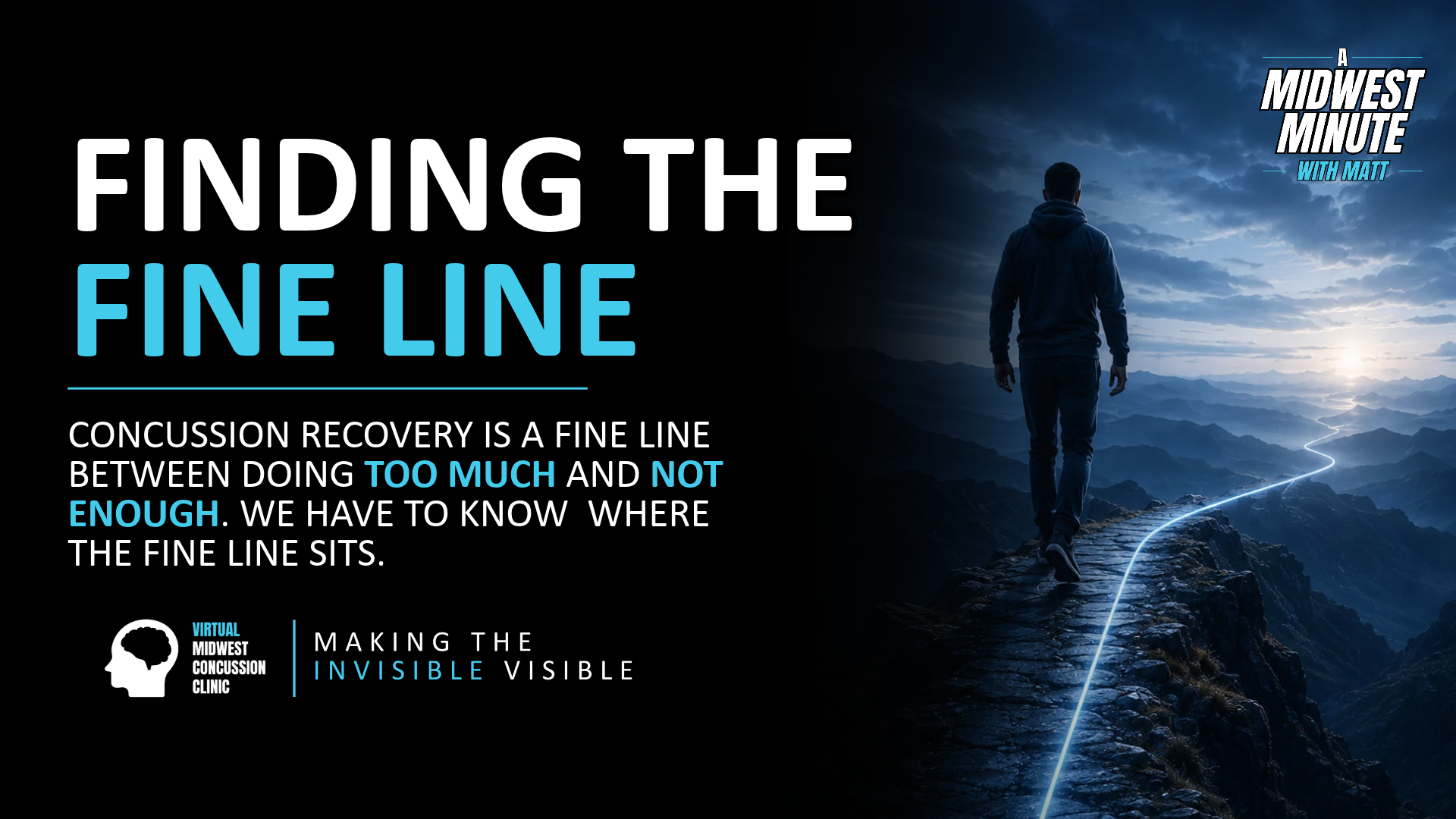
Think about it as taking one step, monitoring what happens, and then deciding what the next step should be.
Recovery Isn’t a Straight Line
This is where having a framework becomes important.
You increase an activity.
You monitor your response.
You adjust when necessary.
Then you continue moving forward.
There will probably be forks in the road.
Something that went well yesterday may be harder today.
Understanding why concussion symptoms can change from day to day can make those adjustments feel less discouraging.
An activity you weren’t ready for last week may become manageable this week.
You may discover that part of your original plan needs to change.
That doesn’t mean the entire recovery has failed.
It means the plan needs to respond to the person.
A concussion recovery plan shouldn’t trap you inside a rigid set of rules. It should give you a framework that helps you make the next decision.
The Framework Is Not the Individual Plan
This distinction matters.
No two concussion recoveries are exactly the same.
Symptoms differ.
Injuries differ.
Jobs differ.
Schools differ.
Responsibilities differ.
And the limitations identified during an evaluation can differ significantly from one person to another.
That’s why a general recovery framework cannot replace an individualized evaluation or treatment plan.
The framework can help you understand the direction you’re trying to move.
The individual plan determines how you move through it.
If You’re Helping Someone Recover
Caregivers deserve guidance too.
When someone breaks an arm or a leg, helping can feel tangible.
You can carry something.
Open a door.
Drive them somewhere.
Help them get around.
A brain injury is different.
You can’t see the injury, and that can make it difficult to know what helping is supposed to look like.
That’s part of why concussion support matters when the injury is invisible.
Sometimes helping means creating a calmer environment.
Sometimes it means helping manage responsibilities while the person gradually returns to normal activities.
Sometimes it means paying attention to changes.
Sometimes it means asking questions at appointments.
And sometimes helping means simply listening when the person recovering is scared or frustrated.
You don’t have to personally solve the concussion.
You can help them take the next step.
You Don’t Need the Entire Road Map Today
When people are scared, they want certainty.
When they’re frustrated, they want answers.
When they feel lost, they want direction.
Concussion recovery doesn’t always give us the certainty of knowing exactly what next week—or even tomorrow—will look like.
That’s also why predicting an exact concussion recovery timeline can be difficult.
But you don’t have to figure out the entire journey at once.
Start with the next decision.
Then the next.
Then the next.
One foot in front of the other.
There may be forks in the road. The plan may need to change. Some days may move faster than others.
That’s okay.
You don’t need the entire road map today.
You need the next step.
Want to Hear More?
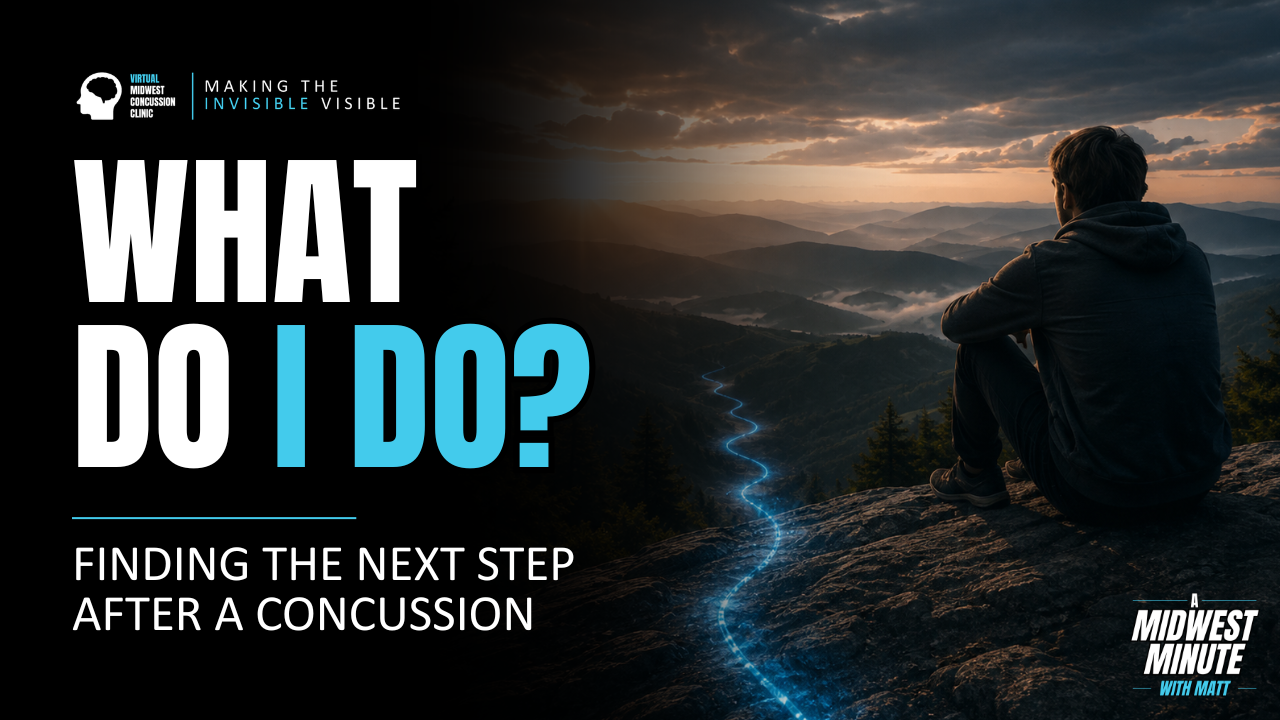
This week’s episode of A Midwest Minute With Matt, “What Do I Do After a Concussion?”, takes a deeper look at what happens after you leave the emergency room, why finding follow-up care can sometimes feel so frustrating, what caregivers can do, and how a simple framework can make the early stages of concussion recovery feel more manageable.
Learn more by listening to this week’s A Midwest Minute With Matt at mwconcussion.com/podcast.
This content is for educational and informational purposes only. It is not medical advice and does not replace evaluation or treatment from a qualified healthcare provider. Every brain injury is unique. If you are experiencing symptoms or have concerns following a head injury, seek care from a licensed medical professional. If you believe you are experiencing a medical emergency, call 911 or your local emergency services.